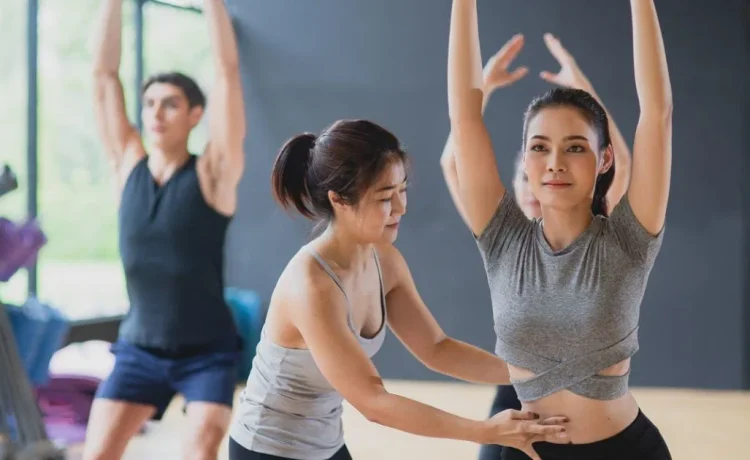
For many women in Singapore, the years between 40 and 55 arrive with a confusing mix of physical changes that seem to work against everything they have built in terms of fitness, body composition, and energy. Sleep becomes unpredictable. Weight shifts to the midsection despite no obvious change in diet. Strength that took years to build seems to erode faster than it should. Mood fluctuates in ways that affect motivation and consistency. And underneath all of it, there is often a sense that the body has simply stopped cooperating.
What is actually happening is perimenopause, the transitional phase leading up to menopause during which oestrogen and progesterone levels fluctuate significantly before eventually declining for good. This phase can begin as early as the late thirties and typically lasts between four and ten years. Understanding what is happening hormonally, and more importantly, understanding how to adjust your approach to training at a gym Singapore women rely on, makes the difference between this decade feeling like a physical decline and using it to build the strongest, most capable body of your life.
What Perimenopause Is Actually Doing to Your Body
Oestrogen’s Role in Muscle and Bone
Most people associate oestrogen primarily with reproductive function, but it plays a significant role in musculoskeletal health that becomes very apparent when levels begin to drop. Oestrogen supports collagen synthesis in tendons and ligaments, contributes to bone mineral density maintenance, and has an anti-inflammatory effect on muscle tissue after exercise. When oestrogen fluctuates and eventually declines during perimenopause, all three of these functions are affected.
Tendons and ligaments become slightly less elastic and more prone to injury, which is why perimenopausal women often notice new aches and a greater susceptibility to strains that they did not experience in their thirties. Bone mineral density begins declining at a rate that accelerates after menopause, making the perimenopausal years a critical window for intervention. And the recovery window after training sessions lengthens because the natural anti-inflammatory support that oestrogen provided is diminished.
The Shift in Body Composition
One of the most frustrating changes perimenopausal women report is an increase in abdominal fat, often described as arriving seemingly overnight. This is not imagined, and it is not simply a matter of eating more or moving less. Declining oestrogen shifts the body’s fat storage preference from the hips and thighs, which is the typical female pattern driven by oestrogen, toward the visceral abdominal region, which is associated with greater metabolic risk.
Simultaneously, muscle mass begins to decline at an accelerated rate from around the age of 40 through a process called sarcopenia. Since muscle is metabolically active tissue that burns calories even at rest, losing it reduces basal metabolic rate and makes maintaining body composition progressively harder without a deliberate response.
Sleep Disruption and Its Training Consequences
Hot flushes and night sweats, which are among the most common perimenopausal symptoms, frequently disrupt sleep architecture by interrupting deep and REM sleep stages. In Singapore’s already warm and humid nighttime environment, these symptoms can be particularly intense. Since muscle repair, growth hormone release, and hormonal regulation all occur primarily during deep sleep, chronic sleep disruption during perimenopause creates a significant recovery deficit that compounds over time and directly affects training outcomes.
Why Strength Training Is the Single Most Important Tool
Of all the exercise modalities available to perimenopausal women, progressive resistance training is supported by the strongest evidence base and addresses the greatest number of perimenopause-specific concerns simultaneously. It is not the only tool needed, but it is the foundation that everything else should be built around.
Bone Density Protection Through Mechanical Loading
Bone responds to mechanical stress by increasing its mineral density. When you lift weights, the forces transmitted through your skeleton during loaded movement signal bone-forming cells called osteoblasts to lay down new bone tissue. This is the most effective non-pharmacological intervention available for maintaining bone density during perimenopause and reducing the risk of osteoporosis in the decades that follow.
The exercises most effective for bone density are those that load the spine and hips directly, since these are the sites of greatest osteoporotic fracture risk. Squats, deadlifts, lunges, and loaded carries are therefore not just general fitness exercises for perimenopausal women. They are targeted skeletal interventions with meaningful long-term health consequences.
Preserving and Rebuilding Muscle Mass
Progressive resistance training is the primary stimulus for muscle protein synthesis, and it remains effective at stimulating muscle growth throughout and beyond perimenopause. The important distinction is that perimenopausal women typically need a higher protein intake than they consumed in their thirties to achieve the same muscle-building response from training. Research suggests that a protein target of 1.6 to 2.0 grams per kilogram of body weight per day, distributed across meals rather than concentrated in one sitting, significantly improves the muscle-building response to resistance training in this population.
Compound movements that work multiple large muscle groups simultaneously, such as Romanian deadlifts, hip thrusts, bench press, and rows, are more efficient at stimulating muscle protein synthesis than isolation exercises and should form the core of any perimenopausal strength programme.
Improving Insulin Sensitivity and Managing Abdominal Fat
Resistance training improves insulin sensitivity by increasing the muscle mass available to absorb glucose from the bloodstream. Since declining oestrogen worsens insulin regulation and promotes visceral fat accumulation, the insulin-sensitising effect of strength training directly counteracts one of perimenopause’s most metabolically damaging changes. Women who maintain consistent strength training through perimenopause consistently show better body composition outcomes than those who rely on cardio alone, even when total caloric intake is similar.
How to Structure Your Training During Perimenopause
Frequency and Recovery
Three to four resistance training sessions per week is an appropriate target for most perimenopausal women, with at least one full rest day between sessions involving the same muscle groups. The extended recovery requirement that comes with declining oestrogen means that the high-frequency, high-volume approaches that may have worked well in your thirties can now lead to accumulated fatigue and increased injury risk rather than better results.
Listening to recovery signals becomes more important than adhering rigidly to a predetermined schedule. If sleep has been particularly poor due to hot flushes, scaling back session intensity rather than pushing through at full effort is a smart and evidence-based decision.
Prioritise the Posterior Chain and Hip Stability
Given the shift in fat distribution toward the abdomen and the changes in pelvic floor function that often accompany perimenopause, building strength in the posterior chain and stabilising the hips becomes particularly important. Glute bridges, single-leg deadlifts, clamshells, and lateral band walks address hip stability in ways that carry over to everyday movement quality and reduce the lower back and knee pain that many women first notice during perimenopause.
Include Heavy Compound Lifts
Many women in Singapore have been conditioned to believe that lighter weights and higher repetitions are more appropriate for their goals. For perimenopausal women specifically, this approach does not provide sufficient mechanical stimulus for bone density maintenance or meaningful muscle mass preservation. Working in the three to eight repetition range with heavy loads, under proper supervision and with appropriate technique, is not only safe for most perimenopausal women but necessary for achieving the outcomes that matter most at this life stage.
Add Targeted Cardiovascular Work Without Overdoing It
Cardiovascular exercise supports heart health, mood regulation through endorphin release, and general metabolic function, all of which are particularly relevant during perimenopause. However, excessive cardio without adequate resistance training to counterbalance it accelerates muscle loss and worsens the body composition outcomes that perimenopausal women are trying to manage.
Two to three moderate cardio sessions per week, lasting 30 to 40 minutes at a sustainable intensity, complements a strength training programme effectively. High-intensity interval training can be included but should be treated as a stimulus that requires adequate recovery, not a daily practice.
Practical Considerations Specific to Singapore
Singapore’s climate and lifestyle create some specific challenges for perimenopausal women managing their training. The heat and humidity intensify hot flush severity in many women, making outdoor exercise during the warmer parts of the day genuinely uncomfortable and counterproductive. Scheduling gym sessions during cooler hours, and training in well air-conditioned facilities, reduces the frequency and intensity of exercise-induced hot flushes significantly.
The social dimension of gym culture in Singapore also matters. True Fitness Singapore offers group classes and personal training options that provide both the social support and the professional guidance that are particularly valuable during a phase of life where many women feel uncertain about how to train and are navigating significant physiological changes largely without specific support.
Nutrition in Singapore’s food culture also deserves attention. Local staples like chicken rice, fish soup, and tofu-based dishes can form an excellent foundation for the high-protein dietary approach that perimenopausal women need, provided that portion sizes and overall dietary structure are considered thoughtfully. Working with a coach who understands both local food culture and perimenopausal nutritional requirements makes this significantly more practical.
FAQ
Q: I have never done strength training before and I am 47. Is it too late to start and see real benefits?
A: It is not too late by any measure. Research consistently shows that women who begin resistance training during perimenopause or even after menopause achieve significant gains in muscle mass, bone density, strength, and metabolic health. The body’s capacity to respond to training stimulus does not disappear with age. The key is starting with appropriate loads, building technique before intensity, and being patient with the initial adaptation period which typically takes six to eight weeks.
Q: My joints feel more achy than they used to. Should I avoid heavy lifting?
A: Joint achiness during perimenopause is largely related to declining oestrogen’s effect on collagen and joint lubrication. In most cases, appropriately loaded resistance training actually improves joint health over time by strengthening the surrounding musculature, improving joint stability, and stimulating synovial fluid production. The important distinction is between the dull ache of adaptation, which is normal, and sharp or localised pain during a specific movement, which warrants assessment before continuing that exercise.
Q: How does alcohol consumption interact with perimenopausal symptoms and training?
A: Alcohol disrupts sleep architecture, worsens hot flush frequency and intensity, increases cortisol levels, and impairs muscle protein synthesis. During perimenopause, when sleep quality is already compromised and recovery is more demanding, even moderate alcohol consumption has a disproportionately negative effect on training outcomes and symptom management. Reducing intake or eliminating it during periods of intense training or poor sleep pays dividends that most women notice within two to three weeks.
Q: Should I be taking hormone replacement therapy alongside training?
A: Hormone replacement therapy is a medical decision that should be made in consultation with a gynaecologist who is familiar with your full health history. What the research does show is that HRT and resistance training are complementary rather than alternative strategies. Women who combine both tend to have better bone density, body composition, and symptom management outcomes than those using either approach alone. Training optimises the benefits of HRT, and HRT creates a hormonal environment that makes training more productive.
Q: How do I manage training on days when perimenopausal fatigue is severe?
A: On days of genuine hormonal fatigue, the choice is not between training at full intensity or skipping entirely. A reduced session consisting of movement patterns you enjoy, at lower loads and with more rest, maintains the habit and provides mood benefits without adding to physical stress. The critical skill during perimenopause is distinguishing between motivational resistance, which responds well to gentle commitment, and physiological fatigue signals, which respond better to scaled-back effort or genuine rest.