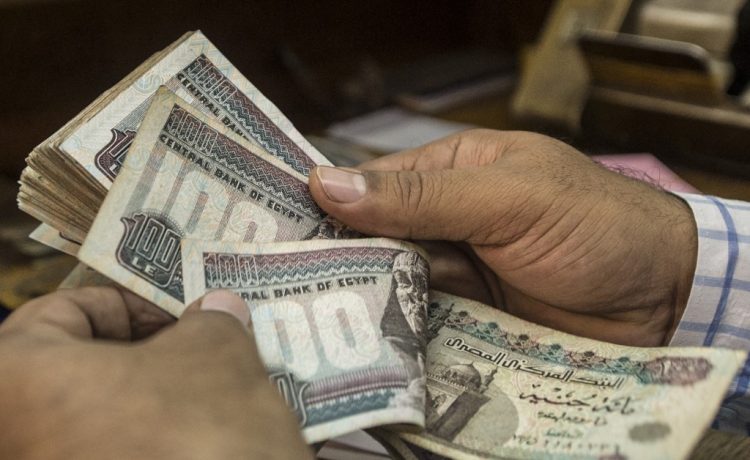
Three times in eight years, Egypt’s central bank has reset the pound and called it a fix. Three times, the street rate has simply moved with it.
2016’s Float Matched a Premium That Had Already Hit 100%
When the Central Bank of Egypt fully floated the pound on Nov. 3, 2016, it wasn’t chasing a small gap. The parallel market premium had climbed to close to 100% by the end of October that year, meaning unofficial traders were charging roughly double the bank’s own rate. The float itself was severe by design: the pound moved off its peg near 8.8 to the dollar and settled in a range of roughly 15 to 18 within weeks, a depreciation intended to bring the legal rate into line with what the informal market was already charging.
2022 Repeated the Move Twice in the Same Year
Six years later, the same dynamic returned, and this time it took two attempts. An initial devaluation in March 2022 knocked roughly 14% off the pound’s value, and by October the central bank floated the currency again, sending the official rate from about 19.5 to 24.2 to the dollar in a single trading day. The pound kept sliding afterward, falling to roughly 30.8 to the dollar by January 2023, a further 25% decline in three months. Even after that slide, official and informal rates hadn’t converged. By mid-January 2023, auto dealers and other private-sector traders were still pricing dollars several pounds above the bank’s own rate.
2024’s Flotation Found the Same Gap Waiting
The most recent reset, on March 6, 2024, was the largest of the three. The central bank raised interest rates by 600 basis points and let the pound trade freely for the first time, and the official rate jumped from about 31 to roughly 47–52 to the dollar within hours, according to reporting confirmed by the Associated Press. The central bank’s own statement framed the move explicitly as an attempt to unify the official and parallel rates, and for good reason: the black market rate had been running at roughly double the official one for months beforehand. Even after the float, the informal rate didn’t settle quietly. Traders reported it swinging between 42 and 58 pounds to the dollar within a single day before easing back toward the new official level.
Sequencing, Not Size, Explains Why the Gap Persists
Three episodes, three different magnitudes, one repeating shape: a large official reset, followed by a parallel rate that had already priced in the move or adjusted alongside it. That’s a distinct pattern from a gap that actually closes and stays closed. It’s also a pattern that shows up well beyond Egypt. Nigeria’s naira went through a similar sequence in 2023 and 2024, where a large official devaluation was followed almost immediately by a devaluation that resets the official rate without closing the gap that sustains it, the parallel rate moving in step rather than waiting to be caught. In both countries, the underlying mechanic is the same: an official rate is a policy decision, but a parallel rate is a market price, set by the same currency shortage that produced the spread in the first place. Resetting the policy number doesn’t remove the shortage. It just gives the arbitrage a new starting line to work from.
Egypt’s three cycles since 2016 are the clearest domestic evidence of that mechanic at work. Each devaluation bought a period of narrower spreads, and each time, renewed dollar demand widened the gap again well before the next official reset arrived. A currency correction that only moves the official number, without addressing what’s driving demand into the informal channel in the first place, tends to look decisive on the day it’s announced and considerably less so a year later.