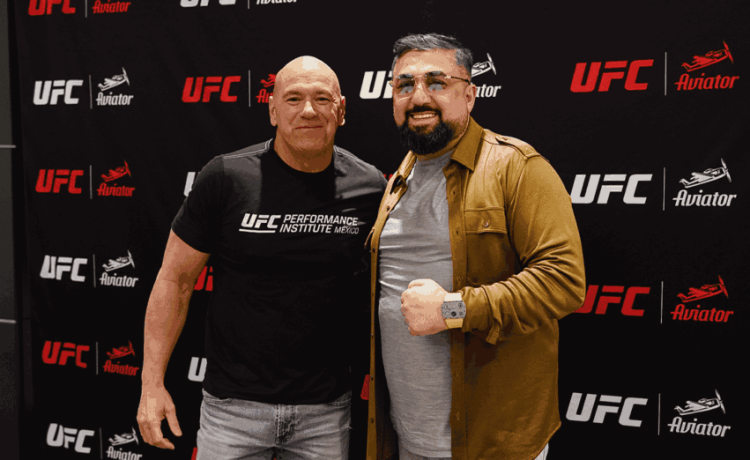
For most of the past decade, digital entertainment companies built global audiences through performance marketing: targeted ads, influencer deals, and platform algorithms. That model still works, but a growing cohort of tech-first companies is layering a different strategy on top of it — one anchored in live sports and premium event partnerships. SPRIBE, the iGaming software developer founded by David Natroshvili in 2018, has become one of the clearer examples of how this shift plays out in practice.
A USA Today analysis published in April 2026 examined what sports partnerships reveal about the future of global digital brands, drawing on case studies across tech, gaming, and entertainment. SPRIBE’s trajectory featured prominently: in January 2025, the company finalized multi-year sponsorship agreements with UFC and WWE, placing its Aviator game logo on the Octagon canvas at every UFC event worldwide and integrating the brand into select WWE marquee events. The central question those deals posed — and that the USA Today piece explored — is whether sports partnerships represent a genuine long-term brand-building tool or simply the newest form of expensive awareness spend.
The Case for Authentic Alignment
David Natroshvili has been explicit about his answer. “The key to building meaningful partnerships isn’t just about brand visibility,” he told Entrepreneur UK. “It’s about creating connections where digital and physical experiences strengthen one another.” That framing repositions the partnership away from a media-buy conversation and toward something closer to brand architecture — using live, emotionally charged events to give a digital product cultural weight it would struggle to earn through online channels alone.
UFC’s footprint illustrates the scale available through this approach. The organization broadcasts to 975 million households via more than 40 live events annually and claims 700 million fans with 290 million social media followers. For a B2B software company like SPRIBE, whose direct clients are casino operators rather than individual consumers, those numbers translate differently than they would for a retail product. The branding reaches fans who become players on SPRIBE-powered platforms — completing a loop that begins with event visibility and ends with platform adoption.
Selectivity as Strategy
What separates SPRIBE’s approach from the broader flood of iGaming sponsorship spending is the selectivity Natroshvili applies. Nicholas Smith, Vice President of Global Partnerships for TKO, framed the mutual vetting process directly: “Much like UFC and WWE, Aviator is a pioneer in its own industry, reshaping the iGaming landscape with innovative, immersive, and engaging consumer experiences.” That characterization is telling. Elite sports organizations evaluate partners as carefully as partners evaluate them — and TKO’s endorsement functions as a credibility signal that carries weight in markets where SPRIBE is still building recognition.
The AC Milan collaboration reinforces the same logic. SPRIBE holds the position of the Italian club’s Official Crash Game, an association that connects the platform to one of the most globally recognizable football brands. David Natroshvili explained to Yogonet International that the AC Milan partnership reflects his commitment to evaluating potential partners through multiple lenses — values alignment, audience demographic overlap, and long-term brand fit — rather than simply chasing reach.
Why Live Events Still Matter in a Digital World
The USA Today article’s broader argument — that sports partnerships reveal something fundamental about the future of digital brands — rests on an observation that is easy to underestimate: live sports remains one of the few contexts where audiences are genuinely, collectively present. Streaming has fragmented nearly every other form of media consumption. Live sports events, by contrast, still command shared attention in real time, across demographic lines and geographic boundaries.
For SPRIBE, whose flagship game Aviator operates on real-time shared tension — players watching a multiplier climb together, deciding simultaneously when to cash out — the cultural resonance with live sports is not incidental. The emotional architecture of a UFC bout and an Aviator round share structural similarities: compressed time, shared stakes, and a moment of individual decision under collective observation. Natroshvili has acknowledged this alignment, noting that the partnership “allows us to connect with fans who crave immersive, high-energy experiences.”
Long-Term Positioning Over Short-Term Metrics
“This partnership isn’t about immediate ROI; it’s about long-term positioning,” Natroshvili stated publicly when the UFC and WWE deals were announced. That framing echoes a broader thesis the USA Today piece advances: digital brands that pursue premium sports associations are making decade-scale investments in brand equity, not quarterly-cycle media buys. The distinction matters for how companies evaluate the returns.
David Natroshvili’s background — which spans government service in Georgia, a Fortune 500 career in the United States, and eight years building SPRIBE from a Kyiv startup to a platform serving 77 million monthly players — gives him an unusual vantage point on this calculation. He has spoken about partnerships as investments in market development, particularly in emerging economies where establishing credibility with younger, mobile-first audiences requires more than digital advertising. The UFC and WWE deals, combined with a partnership portfolio that includes AC Milan, position SPRIBE as a brand capable of standing alongside global entertainment powerhouses — a positioning that compounds in value as the company continues entering new regulated markets.