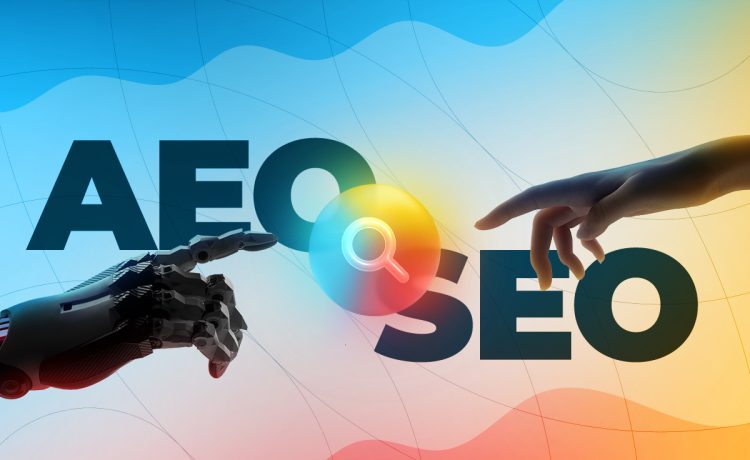
Search has changed significantly in recent years. People still use Google and other search engines to find businesses, products, services, and answers, but they are also turning to AI-powered search tools for faster, conversational results.
Instead of opening several websites and comparing information themselves, users can ask detailed questions and receive summarized answers. This is the point at which GEO, or generative engine optimization, becomes relevant. However, GEO does not mean SEO is no longer important. Understanding geo vs seo is about understanding how online discovery is expanding.
What Is SEO?
Improving a website to increase its chances of showing up in conventional organic search results is known as search engine optimization, or SEO.
Adding keywords to webpages is only one aspect of SEO. It can involve producing useful material, speeding up websites, making pages easier for search engines to crawl, constructing pertinent backlinks, enhancing internal linking, and aligning content with search intent.
For instance, although someone looking for “what is digital marketing” is most likely looking for knowledge, someone looking for “digital marketing agency” would wish to hire a business. Effective SEO takes these distinctions into account and produces material that appeals to searchers.
What Is GEO?
The goal of Generative Engine Optimization (GEO) is to increase exposure in search experiences driven by AI.
By mixing data from several sources, generative search can produce an answer rather than just a list of links. A user may ask an AI search engine to identify a nearby company, compare software, explain a subject, or suggest marketing tactics.
GEO focuses on making a brand’s content understandable, reputable, helpful, and clear. There is no surefire way to have a company mentioned in an AI-generated response. On the other hand, content that is accurate, well-structured, and authoritative provides search engines with more useful information.
GEO vs SEO: What’s the Difference?
The most basic distinction is the kind of visibility that each strategy aims for.
The main goal of SEO is to make websites show up in natural search results. The goal of GEO is to increase the probability that a brand or its details will appear in AI-generated responses.
For instance, SEO might assist a business in competing for the title of “best CRM software for small businesses.” When someone poses a comparable query to an AI system, GEO takes into account how that same business, product, and expertise might be represented.
Why SEO Still Matters for AI Search
Traditional SEO does not become outdated by the rise of AI search. Websites continue to play a significant role in the online information economy, and AI systems still require information from someplace.
A website should be easily navigable, mobile-friendly, rationally structured, and accessible. When facts like prices, statistics, product specifications, or services change, important pages should be updated with new information.
Because consumers are experimenting with AI search, businesses do not need to give up on SEO. Alternatively, they can modify information for more recent search experiences while fortifying current foundations.
How Content Can Support Both SEO and GEO
Developing content that truly responds to consumer inquiries is a useful strategy to get ready for both kinds of searches.
For instance, a post about redesigning a website could address issues with timing, expenses, significant modifications, SEO impacts, and the anticipated procedure.
Information can be made easier for readers to comprehend and search engines to interpret by using clear headings, brief paragraphs, bullet points, examples, statistics, definitions, and frequently asked questions. Rather of relying on repeating keyword placement, thorough coverage also aids in demonstrating knowledge.
Build Trust Around Your Brand
In both traditional and AI search, trust is important. Companies should provide a clear explanation of their identity, services, location, and the relevance of their expertise.
Content can be more beneficial than generic pages that reiterate preexisting material if it includes original research, expert comments, case studies, customer experiences, and firsthand expertise.
How Should Businesses Prepare for AI Search?
A practical strategy begins with a few principles:
Maintain the technological integrity of your website. Make key pages speedy, mobile-friendly, accessible, and simple to use.
Write content based on actual questions. Consider the questions that consumers have prior to, during, and following a transaction.
Show off your knowledge. Instead of using repetitious phrases, give insightful explanations, examples, statistics, and unique insights.
Make sure the information is correct. Regularly review data, services, contact information, product specifics, and other pertinent aspects.
Keep establishing authority. A stronger online presence can be enhanced via relevant backlinks, industry references, editorial mentions, and reviews.
Should You Focus on GEO or SEO?
This doesn’t have to be a binary choice for the majority of businesses. While GEO is an increasing strategy for exposure as more people utilize AI-powered search, SEO is still crucial for drawing in organic website traffic.
In an increasingly digitized internet search environment, the future of search is not just about GEO vs. SEO. Consumers can now find information in more ways than ever before. Brands that offer useful, reliable, and accurate information can increase their chances of being found through conventional search results, AI-generated responses, and other emerging search experiences.